Last Dance Redux: A Modern Script for Nostalgic Design
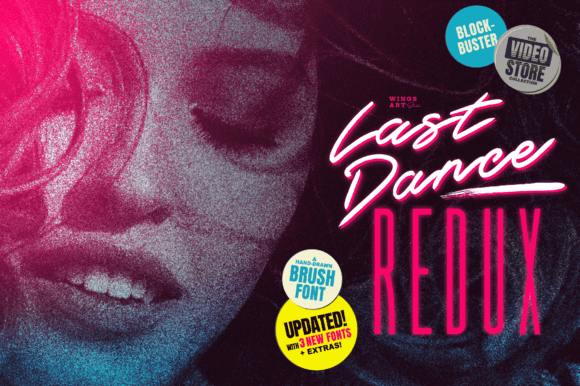
In the landscape of digital typography, few styles evoke a specific era as effectively as the brush-script aesthetic associated with 1980s cinema. Last Dance Redux represents a significant evolution in this genre, offering designers a tool that bridges the gap between gritty retro authenticity and modern technical efficiency. This font family is designed to capture the feel-good energy of movie blockbusters that defined teenage imagination, while serving as a functional solution for recreating the unique atmosphere of video store culture.
Understanding the Evolution from Original to Redux
To evaluate Last Dance Redux, it is necessary to first understand its predecessor. The original Last Dance font was celebrated for its hand-drawn texture, which provided a distinct cinematic quality suitable for aerobics competition posters or urban thrillers. However, that same texture often introduced visual noise that could hinder readability in certain contexts. Last Dance Redux takes that original design philosophy and strips it back to its bare essentials. The result is a clean, uniform look that prioritizes letter flow without sacrificing the nostalgic character of the script.
This transition from a textured original to a streamlined redux addresses common pain points in web and print design. By removing the heavy grain, the new version improves legibility while maintaining the dynamic strokes that make the typeface stand out. For projects requiring extensive text usage, this refinement makes Last Dance Redux a more viable option than its text-heavy counterpart.
Key Features and Technical Capabilities
From a practical standpoint, the utility of a font family depends on its character set and performance characteristics. Last Dance Redux offers comprehensive language support, including uppercase and lowercase characters, punctuation, and numerals. The inclusion of two full sets of alternatives allows for greater typographic variety, preventing the repetitive look that can plague script fonts when used in longer passages.
- Character Sets: Both versions of the family include upper and lowercase letters, numerals (0-9), and standard punctuation.
- Alternatives: Users have access to multiple glyph variations to enhance visual interest and improve flow within sentences.
- Underlines: A selection of underlines is included, ensuring that emphasis marks harmonize with the brush style rather than clashing with it.
- Performance: The Redux version is optimized to be lighter on system resources. This makes it an efficient choice for web projects where file size and loading speed are critical factors.
Evaluating Use Cases: Where Last Dance Redux Excels
The decision to use Last Dance Redux should be driven by the specific goals of the project. Its primary strength lies in evoking a sense of nostalgia. It is particularly well-suited for designs that aim to recreate the feeling of Friday nights at the video store or the excitement of an 80s movie premiere.
For branding purposes, this font works best in short-form applications such as headlines, logos, and poster titles. The script nature of the typeface naturally draws the eye, making it ideal for capturing attention quickly. Because the Redux version has improved readability compared to the original, it can also be used for slightly longer body text in editorial layouts, provided the context remains casual and stylistic.
Consider the following scenarios where Last Dance Redux is a strong fit:
- Cinematic Posters: Whether promoting a film festival or a local theater event, the font captures the essence of vintage movie marketing.
- Event Branding: Retro-themed parties, 80s dance nights, or music festivals benefit from the energetic, hand-lettered vibe.
- Digital Marketing: Social media graphics and email headers require fonts that load quickly and look good on various screen sizes. The optimized weight of the Redux version supports this need.
- Product Packaging: For products targeting a youthful demographic or those with a retro-inspired aesthetic, the font adds immediate character.
Tradeoffs and Considerations
While Last Dance Redux offers significant improvements over the original, it is important to acknowledge the tradeoffs inherent in any font selection. The primary consideration is tone. The script style is inherently informal and expressive. It may not be appropriate for corporate communications, legal documents, or any context requiring strict neutrality and high-level professionalism.
Additionally, even with the improvements in readability, script fonts generally perform poorly as long-form body text. The variation in stroke width and the connected nature of the letters can cause fatigue for readers if used in large blocks. Designers should plan to pair Last Dance Redux with a clean sans-serif or serif typeface for supporting text to ensure the overall layout remains balanced and accessible.
Another factor to consider is the distinction between the two available versions. If a project specifically requires the gritty, textured look of the 80s VHS cover art, the original Last Dance might still be the superior choice despite its heavier file size. The Redux version sacrifices some of that raw texture for clarity. Therefore, the choice often comes down to a balance between aesthetic grit and functional clarity.
Decision-Making Insights for Designers
When evaluating whether Last Dance Redux aligns with your project needs, start by defining the emotional response you want to elicit from the audience. If the goal is to create a warm, inviting, and nostalgic atmosphere, this font is likely an excellent candidate. However, if the priority is maximum legibility for complex data or formal content, alternative typefaces would be more effective.
It is also advisable to test the font in its intended environment before finalizing a design. Since Last Dance Redux is optimized for web use, verify how it renders across different browsers and devices. Check the contrast levels of the strokes against background colors to ensure accessibility standards are met. The inclusion of alternatives is a valuable feature here; utilizing these variations can break up monotony in headlines without compromising the cohesive look of the brand.
Conclusion
Last Dance Redux stands as a refined iteration of a popular design staple. By streamlining the original's textures, it creates a versatile tool that honors the past while meeting the demands of modern digital production. It is a compelling option for designers seeking to inject personality and historical context into their work, provided the application matches the font's casual and expressive nature. For those looking to replicate the magic of 80s cinema with a focus on performance and readability, this font family offers a robust and reliable solution.