Why Alisabela Brushy Might Be Your Next Design Secret (And What to Watch Out For)
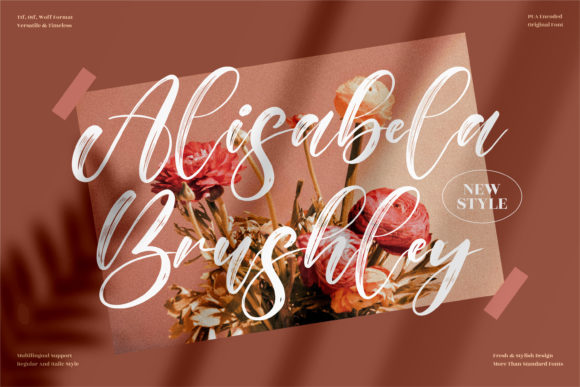
When you are staring at a blank canvas trying to design a wedding invitation or a social media graphic, the difference between a generic look and something truly ravishing often comes down to a single font choice. Enter Alisabela Brushley. This stylish and brushed script font is designed to capture attention immediately, offering a hand-lettered feel that digital typefaces struggle to replicate.
It is easy to fall for its charm. The strokes vary in thickness, mimicking the natural pressure of a brush, which adds an organic warmth to your projects. Whether you are creating eye-catching social media posts, beautiful stationary art, or elegant invitations, this typeface promises to elevate your visual communication. However, just because a font looks good in a preview doesn't mean it will perform well in your final project. Many designers, from beginners to seasoned professionals, make critical errors when integrating script fonts like this into their workflow.
Before you download or purchase, let's discuss what makes this font special and, more importantly, how to avoid the common pitfalls that can ruin your design's impact.
The Allure of the Brushed Look
Alisabela Brushley belongs to a category of typography that relies on texture and movement. Unlike rigid sans-serif fonts or traditional serif typefaces, a brushed script implies motion. It suggests that a human hand was involved in its creation. This is why it is so popular for wedding invitations; it conveys intimacy and effort, qualities that guests appreciate.
For entrepreneurs and small business owners, using this font correctly can signal that a brand cares about details. A coffee shop menu, a boutique clothing label, or a handmade soap packaging can all benefit from the brushed aesthetic. It breaks the monotony of standard corporate design. But here is the catch: this aesthetic requires a specific approach. If you treat it like a standard text block, you risk losing that very elegance you paid for.
Common Mistakes When Using Script Fonts
Even experienced creators sometimes stumble when introducing a complex typeface like Alisabela Brushley into a layout. These mistakes often stem from misunderstanding the nature of script fonts. They are not designed for heavy lifting or dense blocks of information. Let's look at where things usually go wrong and how to correct them.
Overloading the Composition
The most frequent error is using too many different scripts in one design. You might be tempted to pair Alisabela Brushley with another decorative font to create "maximum impact." This rarely works. When you mix two competing scripts, the result is visual chaos rather than harmony. The eye has nowhere to rest, and the message gets lost.
Better Approach: Stick to a rule of thumb: use one display script for headlines or accents and pair it with a clean, neutral sans-serif or serif for body text. Let Alisabela Brushley be the star, and let the supporting text play the role of the stage crew—essential, but unobtrusive.
Ignoring Readability and Legibility
Because Alisabela Brushley features connected letters and varying stroke widths, it can become difficult to read if used incorrectly. A common mistake is setting the tracking (letter spacing) too tight. In a script font, tight spacing causes the flourishes to collide, turning distinct letters into a muddy blob. Conversely, setting it too wide breaks the flow of the handwriting illusion.
How to Fix It: Always test your text at the actual size it will appear. A headline that looks perfect at 72 points might be illegible at 14 points. Increase your tracking slightly to give the characters room to breathe. If you are writing a sentence longer than three words, reconsider whether this font is the right tool for the job.
Pitfalls in Downloading and Licensing
One area where many users get tripped up is the technical side of acquiring the font. Not all versions of a font family are created equal, and licensing terms can be tricky. Some free downloads found online may lack the full character set required for professional work, such as ligatures, swashes, or alternate glyphs. Without these features, you lose the ability to customize the look of your text, making it appear stiff and robotic.
Furthermore, assuming that a font is "free" for commercial use is a dangerous assumption. Many creators offer personal licenses only. If you use Alisabela Brushley for a client's wedding invite or a product label without the proper commercial license, you could face legal issues. This oversight can lead to costly fines or the need to redesign your entire campaign last minute.
- Check the License: Before buying or downloading, read the terms carefully. Ensure you have the rights to use the font for your specific purpose (web, print, merchandise).
- Verify the File Format: Make sure you are getting the OpenType (.otf) or TrueType (.ttf) version that supports advanced features like contextual alternates.
- Test the Full Set: Install the font and type out a sample including numbers, punctuation, and special symbols to ensure they match the style of the letters.
Evaluating Quality Before You Commit
If you are considering purchasing or downloading Alisabela Brushley, take a moment to evaluate its quality objectively. A high-quality font should feel consistent. While the strokes vary to mimic a brush, the weight and rhythm should remain balanced throughout the alphabet. If some letters look significantly heavier or lighter than others without a stylistic reason, the kerning pairs might be poorly designed.
Another factor to consider is compatibility. Does the font render well on mobile devices? For bloggers and marketers, this is crucial. If your website visitors see a broken font file or a fallback to a generic system font, your brand's image suffers. Always test your designs across different screens and browsers before finalizing a project.
Practical Advice for Better Results
To get the most out of Alisabela Brushley, think about the context of your audience. Are you targeting a luxury market? The elegance of this font aligns perfectly with high-end branding. Are you creating content for a tech blog? You might find that the script clashes with the modern, minimalist vibe of the industry.
Use the font strategically. Instead of writing a whole paragraph in Alisabela Brushley, use it for the title, the signature, or key emphasis words. This technique creates a hierarchy of information that guides the reader's eye naturally. It also ensures that your message remains clear while still looking artistic.
Remember that good design is often about subtraction. If you find yourself adding more elements to compensate for a font that isn't working, stop. Often, the solution is to simplify the layout and let the typography do the heavy lifting. By respecting the unique characteristics of this brushed script and avoiding the common traps of overuse and poor licensing, you can create designs that are not only gorgeous but also functional and professional.
Whether you are a hobbyist crafting a birthday card or a professional marketer launching a new product line, paying attention to these details will save you time and frustration. Take the time to understand the tool you are using, respect its limitations, and leverage its strengths. That is the secret to unlocking the full potential of Alisabela Brushley.